
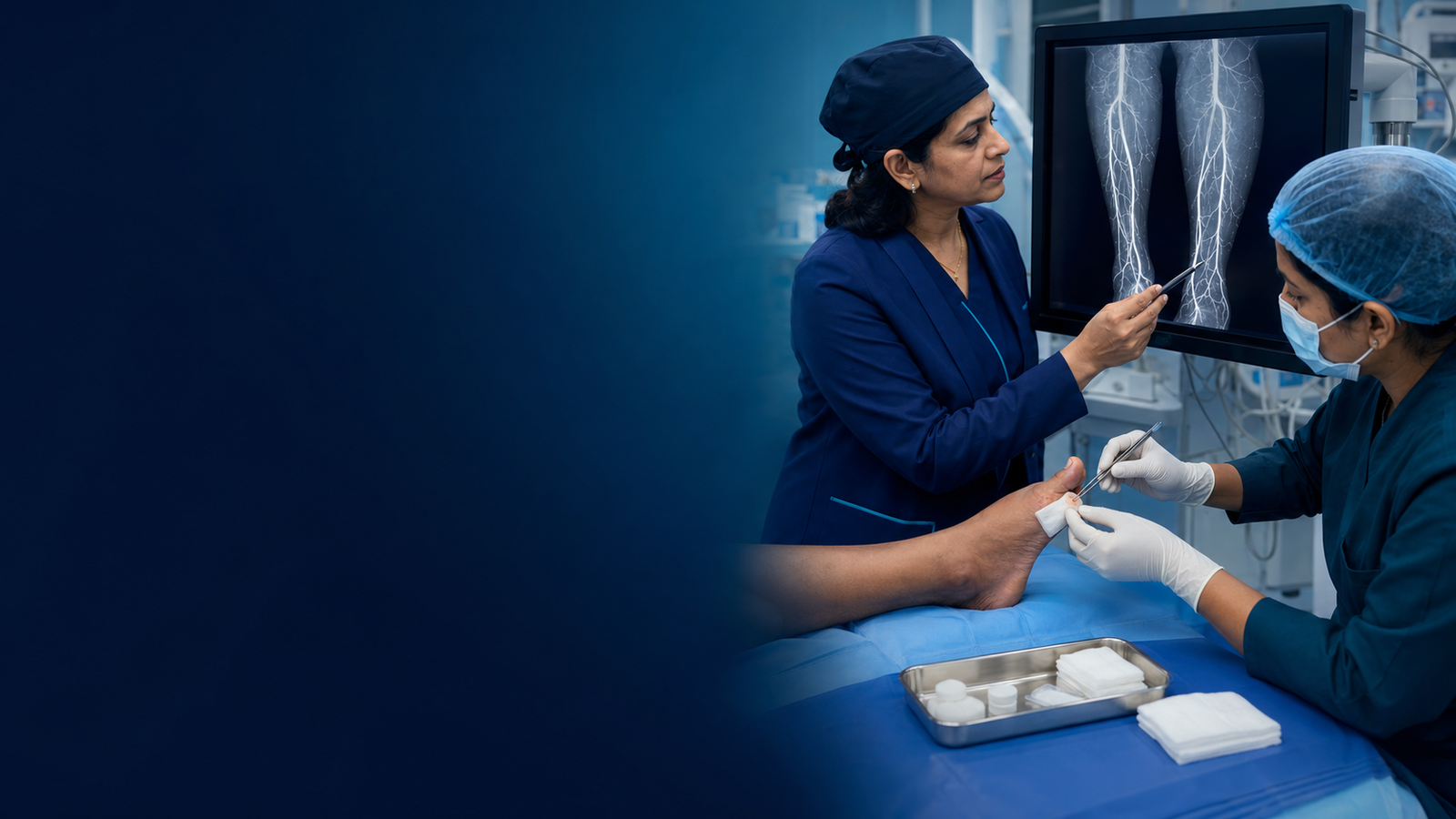
What Is Diabetic Foot and Limb Salvage?
Diabetic foot and limb-salvage treatment addresses the reasons a wound is not healing. Neuropathy, pressure, infection and peripheral artery disease frequently occur together. The plan may include urgent infection treatment, debridement, off-loading, angioplasty or bypass to restore blood flow, diabetes control and structured wound follow-up. Early evaluation can preserve more treatment options, but limb salvage cannot be guaranteed before tissue viability and overall health are assessed.
Who May Be Considered?
- A diabetic foot ulcer that is slow to heal
- Rest pain, gangrene or blackening of toes
- Recurrent infection or drainage
- Poor pulses or imaging-confirmed arterial disease
Assessment and Tests
- Urgent wound, infection and tissue-viability examination
- Arterial Doppler and pressure testing
- CT or catheter angiography when revascularisation is considered
- Blood tests, glucose review and imaging for deeper infection
How Treatment May Be Performed
Control spreading infection and protect viable tissue
Restore arterial flow with angioplasty, stenting or bypass when beneficial
Remove dead or infected tissue when required
Use dressings and off-loading to reduce pressure during healing
How to Prepare
Bring a full timeline of the wound, photographs, culture reports, antibiotics, glucose records, kidney reports and prior vascular imaging. Do not eat before an urgent procedure unless instructed, but do not delay emergency assessment to obtain documents.
Comfort and Anaesthesia Planning
Anaesthesia depends on the intervention. Wound debridement, endovascular revascularisation and bypass have different requirements, and severe infection or medical illness may affect the safest plan.
What to Expect During Recovery
Healing often requires repeated review rather than one procedure. Weight-bearing may need restriction, dressings and off-loading must continue, and blood-flow improvement does not replace infection or pressure management. Recovery length varies with wound depth, circulation, kidney function, glucose control and nutrition.
Risks and Limitations
Risks arise from both the disease and treatment, including infection progression, bleeding, kidney or contrast problems, revascularisation failure, recurrent blockage and the need for minor or major amputation. The team should explain realistic goals and signs of deterioration.
Alternatives to Consider
When revascularisation is not technically possible or expected to help, treatment may focus on infection control, wound care, pain relief or the most functional level of amputation. The decision should consider survival, mobility, rehabilitation potential and patient preference.
Follow-Up After Treatment
Regular wound measurement, vascular checks, glucose management, footwear planning and recurrence prevention are essential. A healed wound remains a high-risk foot and requires daily inspection and prompt attention to any new blister or colour change.
